← go back
REVERSE ENGINEERING UAPS
may 9 2025
The UFO files have been released. I haven't had the time to look through them yet but now that we are getting even more information about these Unidentified Aerial Phenomena, I'd like to speculate about how these engines work.
Warning, there is a lot of wacko stuff when it comes to UFOs and aliens. I don't really feel like debating this as these things are mostly speculation. However, I am interested in physics and would like to see if we can first-principle reason our way to a working UFO engine. This version will be short and brief, but once I get the time, I will do a deep dive into this subject.
Turbine based engines, like that of rockets, jets, and industrial power plants, all work in generally the same way. First, you take air and pressurize it. The increased pressure makes the air hot, since you have the same amount of energy in a smaller space and the particles collide more often. Then, you inject a bit of fuel which in this pressurized hot environment results in spontaneous combustion. This chemical reaction releases even more energy into the environment, and then these high energy particles are shot out the back of the engine, resulting in thrust, which then moves your rocket or jet.
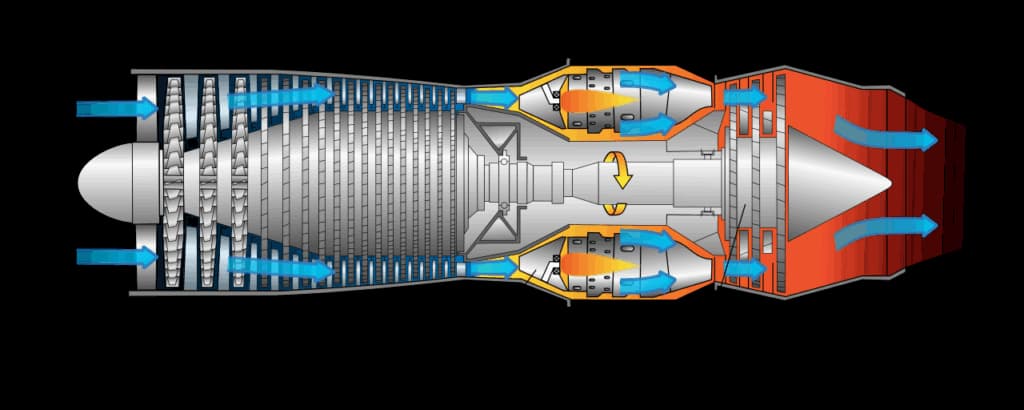
What is thrust? Thrust is a reaction force described by Newton's third law, which states that every force has an equal and opposite reaction. Shoot particle out, go forward. We can see that thrust has a very simple formula:
where is thrust, is the velocity of the expelled particles, and is the change in mass over time. Analyzing this formula, we can see why the turbine engines work. They create thrust by pressurizing particles, injecting fuel to create combustion, allow particles to escape out the back. This is a change in mass over time with high velocity particles, fufilling both parts of the thrust equation.
Based on what I can tell, a UFO engine would have to create thrust while adhering to the following constraints:
Right off the bat, convential turbine engines would not work. Sound is just differences in pressure, so this engine can't create external pressure differences. This is a problem because all of our combustion engines require there to be pressure.
Let's assume that there isn't any crazy gravity manipulation going on in these UFO engines (btw, have you seen this patent?), and that they do indeed utilize some notion of thrust. At first glance, it might seem impossible for them to produce thrust. If there is no visible exhaust, how would they lose mass over time? And since there is no pressure involved in the engines (requirement #1), how could they possibly get high speed particles? Well, I actually see two plausible solutions.
One way in which we can obtain without expelling gas is with nuclear fission. Fission makes use of radioactive isotopes which release , , and particles. Over time, we can see that an element releasing high energy particles loses mass over time. You can see this with , as releasing energy would result in a...you guessed it...a change in mass over time!
That's one half of the formula for thrust. What about the other half? Thankfully, we already have solved the other half, as the velocity , comes from the emission of the radioactive particles which travel at the speed of light.
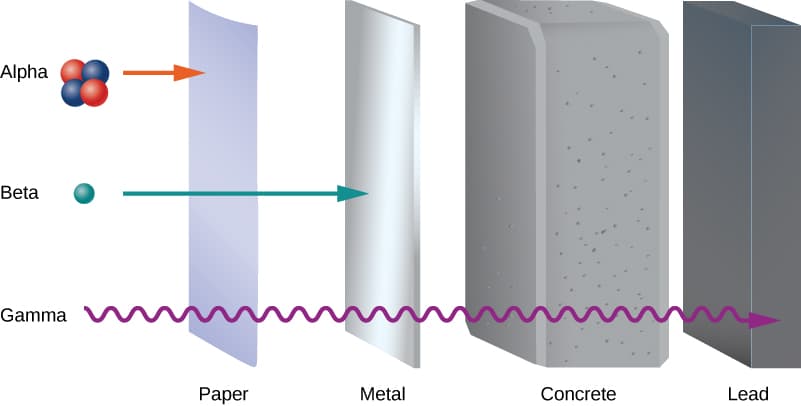
I'm not sure what material these flying objects are made out of, but if they are made out of metal, then rays would likely be the particle that has to be emitted. The reason is that there are three types of radioactive decay particles: , , and . particles get stopped by paper. particles get stopped by metal. rays get stopped by lead. particles are ideal for our engine because, since they phase through metal, they wouldn't cause the spacecraft to melt from the extreme heat from absorbing all the high velocity particles.
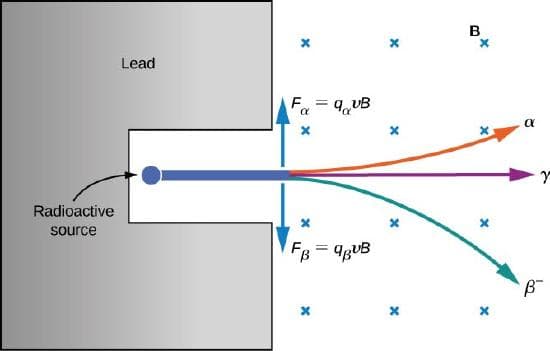
Great, we are making progress. However, we have an unresolved problem. As it currently stands, our fission engine wouldn't move. This is because radioactive elements on average radiate in all directions uniformly, so the net force would be zero as all the forces would cancel each other out. One can solve this by creating a directional thrust force vector. Since particles are blocked by lead, you can make a lead encasing that only allows one direction of particles to go exit, similar to the lead block on the left side of this diagram below.
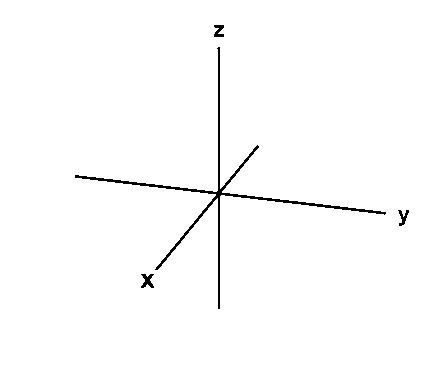
In order to move around around in a three dimensional space, we would need to have an x, y, and z component for thrust. I imagine a lead block with holes going in each of these directions. One could open and close each of these holes to direct where you travel in space.
There already exists a drone like this developed back in 2008 by Lockheed Martin. It has quite an ominous name, being the Multiple Kill Vehicle (MKV). Not sure why it is called that, it probably is just a name for their fifth version of the vehicle (mark five). Anyways, here is a video of it. We can also see that is has additional thrust output going in the diagonal directions.
This is the general vision in which I have in mind in how the engines work. Obviously, there would no combustion happening, as it fails both of the engine requirements. Instead, the vehicle would get thrust by the emission of particles.
What type of fuel can be used? Well, we have to be a bit careful here, we can't use any element as fuel. For example, well-known elements like Uranium have an extremely long half-life, on the order of 4 billion years. This is why they are nice for nuclear reactors, since they can be used as a power source over a long period of time. However, for a fission engine that needs high thrust output, this would result in an incredibly low , resulting in zero thrust. Is there another radioactive element that we can use as fuel? Of course! Let's remind ourselves of the Periodic Table of Elements:
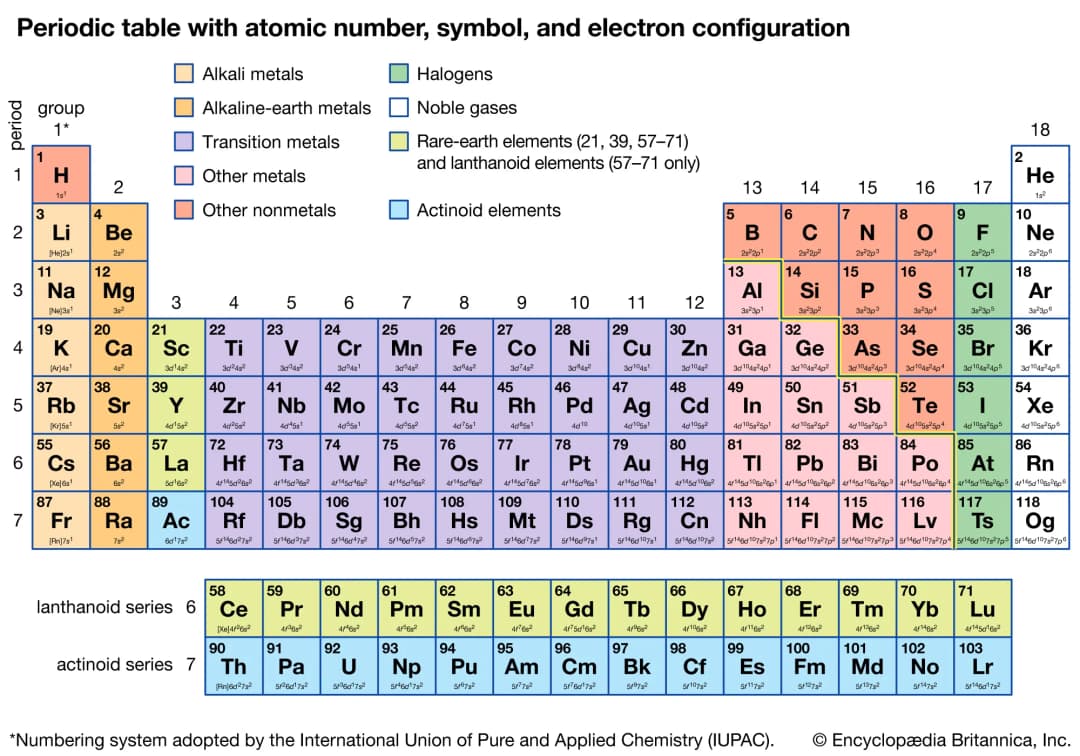
Technetium (Element 43), Promethium (Element 61), and all elements above 83 are radioactive, so we can choose from these. Uranium is the heaviest natural element, having 92 protons, so elements 93 and above are super-heavy but have only been synthesized in a lab.
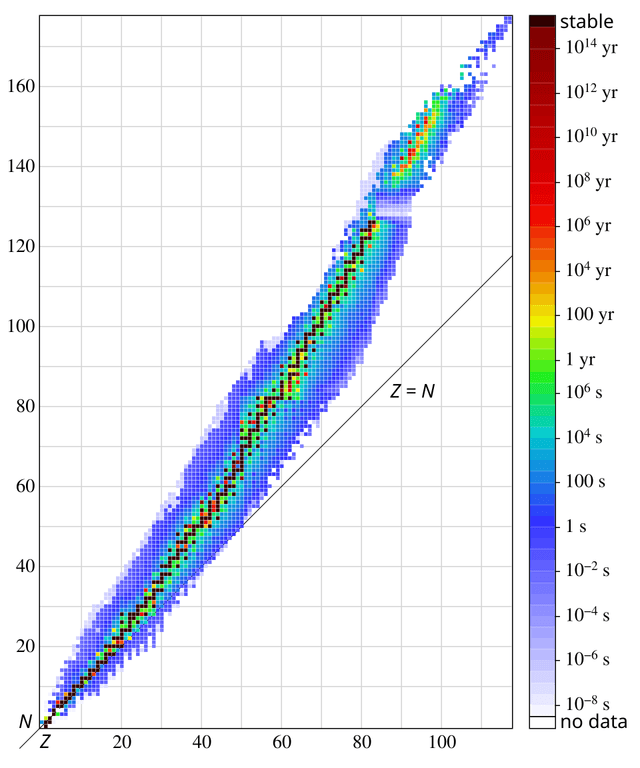
Ideally, we would want to pick an element as fuel that has a high mass and short half-life. These types of candidates would be in the top right corner of the isostope stability diagram above. I'm no nuclear scientist, so this is really a shot in the dark for me, and I'm sure there is a lot of room for improvement to choose the best combination of mass, quick half-life, release of particles, and ease of manufacturing. We can find the half-lives of all these elements, along with their isotopes, by looking at the list of radioactive nuclides by half-life. I'm thinking that isotopes known as nuclear isomers, which are marked with a m, would be good candidates as they primarily emit particles. Let's choose Darmstadtium-271m as it is the heaviest element that primarily emits particles and has a quick half-life of 1.7 milliseconds.
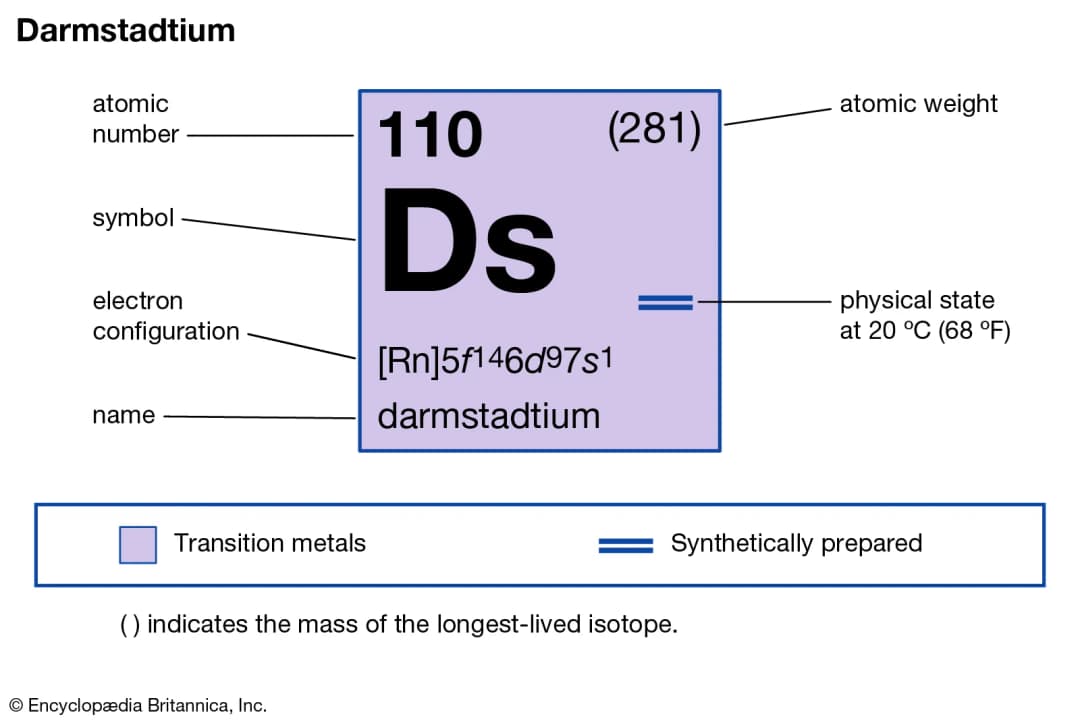
A full release of energy from just one gram of Darmstadtium-271m would be enormous at 75 GJ. This is equivalent to a few tons of TNT. Perhaps this would actually be too much energy, we want something that can give us a smooth thrust curve and is sustainable over time for a vehicle that probably weighs several tons. Of course, there are lots of other elements that strike the set of properties. Some think it could be a stable isotope of Moscovium.
A nuclear fusion engine could present a couple of advantages over a fission based engine. Instead of losing mass over time, the energy output would come from a positive merging of two particles, giving us . Something interesting to note about our current fusion engines, called Tokamaks, is that they look like they could fit perfectly inside of a flying saucer.
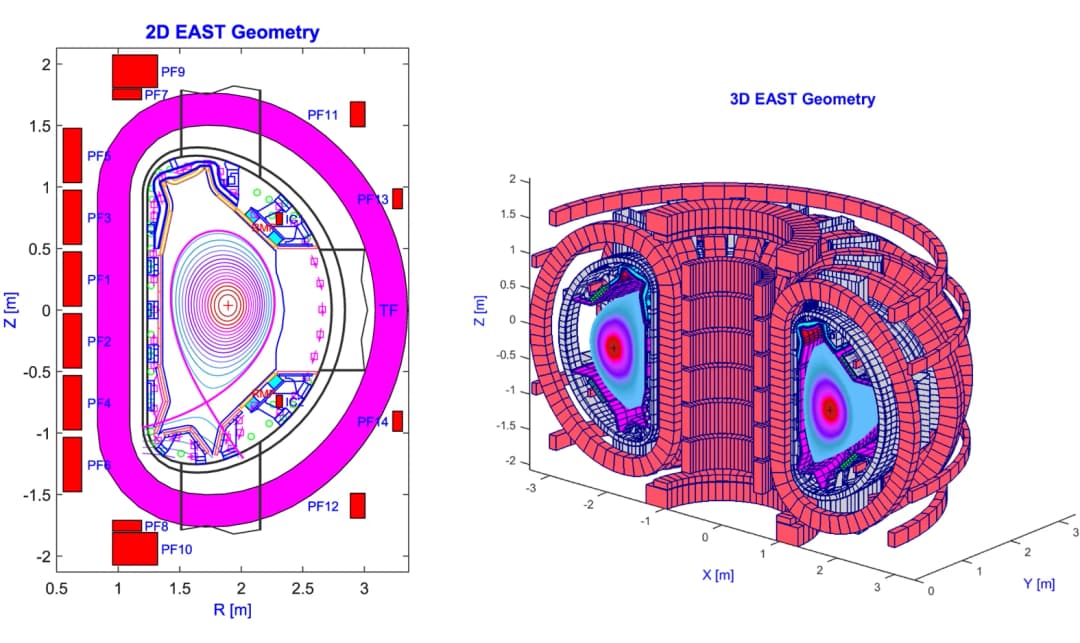
Perhaps the biggest benefit for a fusion engine would be the fuel source as it could run on hydrogen isotopes. Current nuclear fusion reactors have a two step process:
This is known as Deuterium fusion, which produces energy without any radioactive by-product. It produces an enormous amount of energy with 1 gram of dueterium in this chain producing 350 GJ. That is 4.7x the fission engine and around 2 million times more energy per gram than gasoline.
Deuterium is known as "heavy hydrogen" and is a stable, naturally occurring isotope of hydrogen containing one proton and one neutron in its nucleus. It is the second stage of the proton-proton chain, which is what the Sun's fusion does. The reason why fusion releases more energy than fission is because of the four fundamental forces: strong nuclear, electromagnetic, weak nuclear, and gravity. Fission involves the weak nuclear force, whereas fusion involves the strong nuclear force, which is about ten million times more powerful and is the most powerful force. And for every force, there is an equal opposite reaction, so overcoming the strong nuclear creates a very powerful reaction.
The fact that nuclear fusion is commonly done with Deuterium is very interesting, precisely because it is commonly found in ocean water. Seawater contains roughly 33 grams of Deuterium per cubic meter, so there is a near infinite amount supply of it, and it can easily be extracted through the process of water electrolysis. Could this be why many UAPs are seen over the ocean? Is Earth used as a galactical gas (deuterium) station?

So, there we have it. Without breaking the laws of physics, we have shown that in theory it is possible to create an engine that creates thrust without requiring pressure differences or visible exhaust.